
Seven people. One lemonade stand. Far too many ideas.
About Us
At the center of SQUEEZED is something remarkably ordinary: a lemonade stand.
Sam wants to keep it simple. Claire sees something special in it. Anya wants to understand why people behave the way they do around it. Greg sees untapped potential. Blake sees something that could benefit from proper management. Riley sees conversations that could always become a little more interesting.
And somewhere above all of them is Chad.
None of these people wake up intending to make life unnecessarily complicated.
Most of them genuinely believe they are helping.
That's the problem.
As personalities, ambitions, insecurities, philosophies, and increasingly elaborate systems gather around one very small stand, selling lemonade becomes almost secondary to understanding the people selling it.
Meet the Team of Professionals
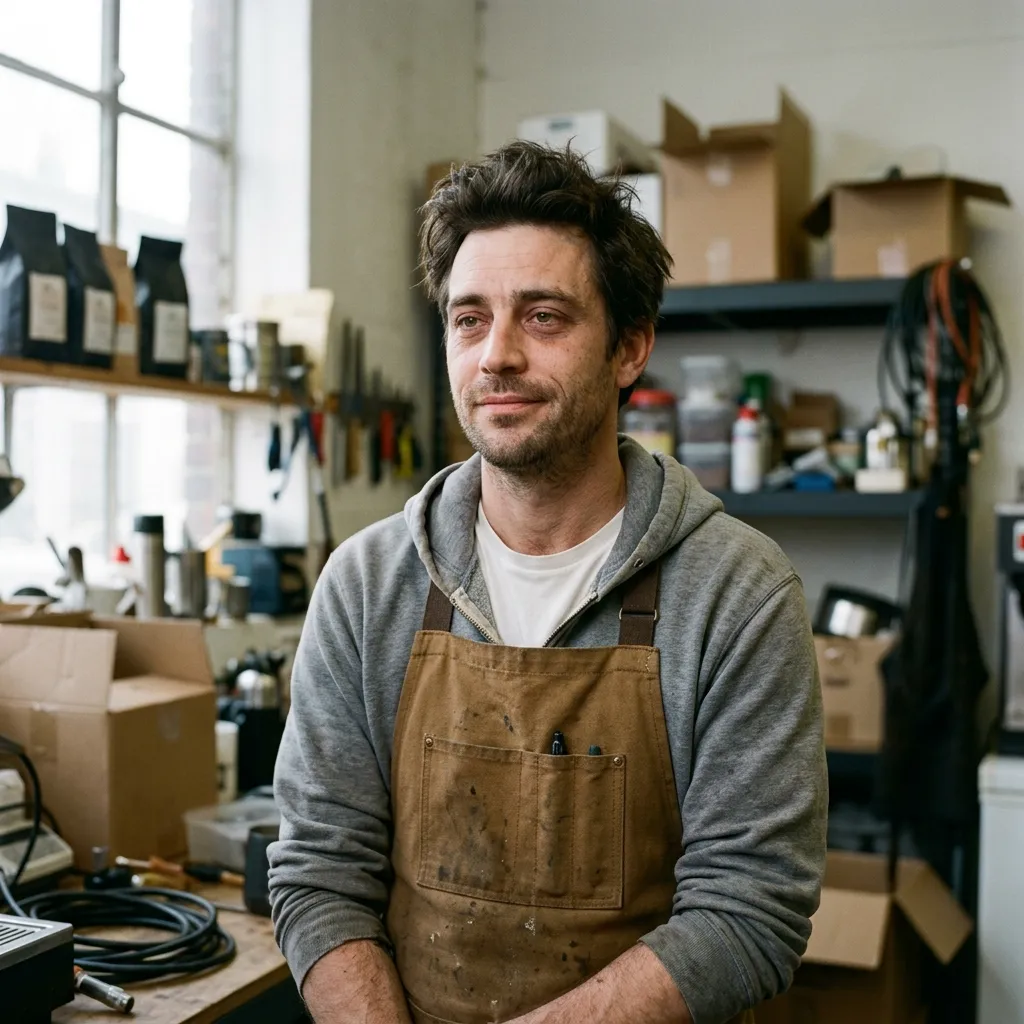
Sam
Sam walked away from a successful corporate career after watching simple ideas become buried beneath management, strategy, growth, and complexity.
The lemonade stand was supposed to be the opposite.
Keep it small.
Keep it understandable. Do honest work and let the result speak for itself.
Practical Minimalist



Riley
Riley rarely needs to create a problem.
People are perfectly capable of doing that themselves.
What Riley excels at is changing how everyone understands the problem once it exists.
Charming, persuasive, emotionally observant, and almost impossibly confident, Riley can redirect an argument until everyone begins questioning what they were originally arguing about.
Reframer

Anya
Anya came to the lemonade stand because something about it didn't make sense.
Adults were operating a lemonade stand without an obvious business plan, expansion strategy, or particular ambition beyond selling lemonade.
So Anya stayed to watch.
Quiet, thoughtful, and fascinated by patterns in human behavior, Anya notices contradictions other people pass over.
Curious Observer

Claire
Claire sees something in the lemonade stand that can't easily be measured.
To her, the stand isn't important because of growth, efficiency, strategy, or management.
It's important because people gather there.
Warm, empathetic, optimistic, and fiercely loyal, Claire has gradually become part of the stand simply because she keeps coming back.
Claire believes the stand is special.
Heart of the Stand
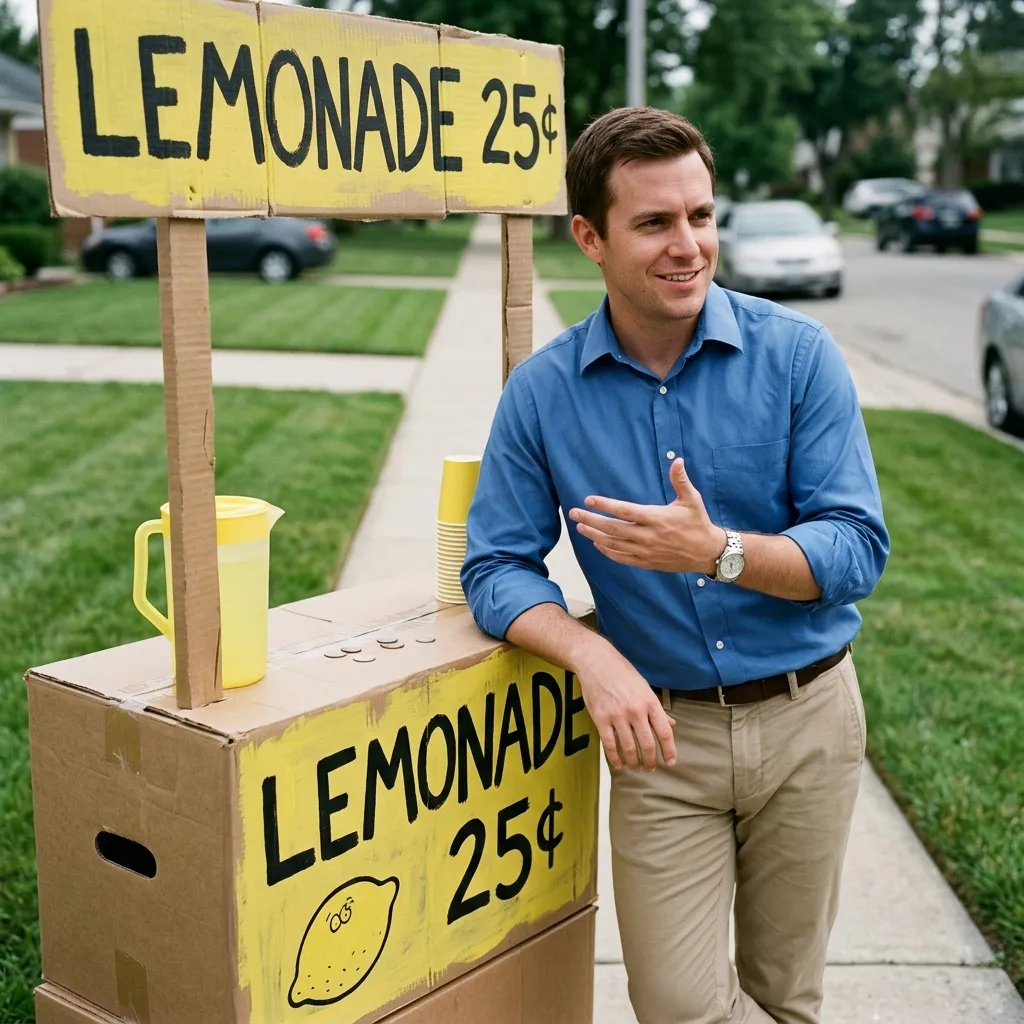
Greg
Greg sees possibilities.
Where someone else might see a table, a pitcher, and several cups, Greg sees branding, market expansion, customer retention, and probably a loyalty program.
Nobody officially appointed Greg as the stand's business advisor.
Ambitious, persistent, creative, and highly confident in his own ideas, Greg genuinely believes the stand could become something much larger.
Unofficial Strategist

Blake
Blake takes management seriously.
Possibly more seriously than lemonade requires.
Organized, hardworking, ambitious, and highly conscious of how her performance appears to corporate leadership.
Blake approaches the stand as an opportunity to demonstrate what proper management can accomplish.
Blake doesn't want to make things complicated, she also wants to make them professional.
Corporate Climber

Chad
Chad is the Regional Manager.
Exactly what region requires management remains somewhat unclear.
Relaxed, absent-minded, and remarkably difficult to alarm, Chad usually exists several steps removed from whatever crisis has consumed everyone else.
Then, occasionally, Chad asks the most sensible question in the room.
Those moments are deeply inconvenient.
Unpredictable Authority
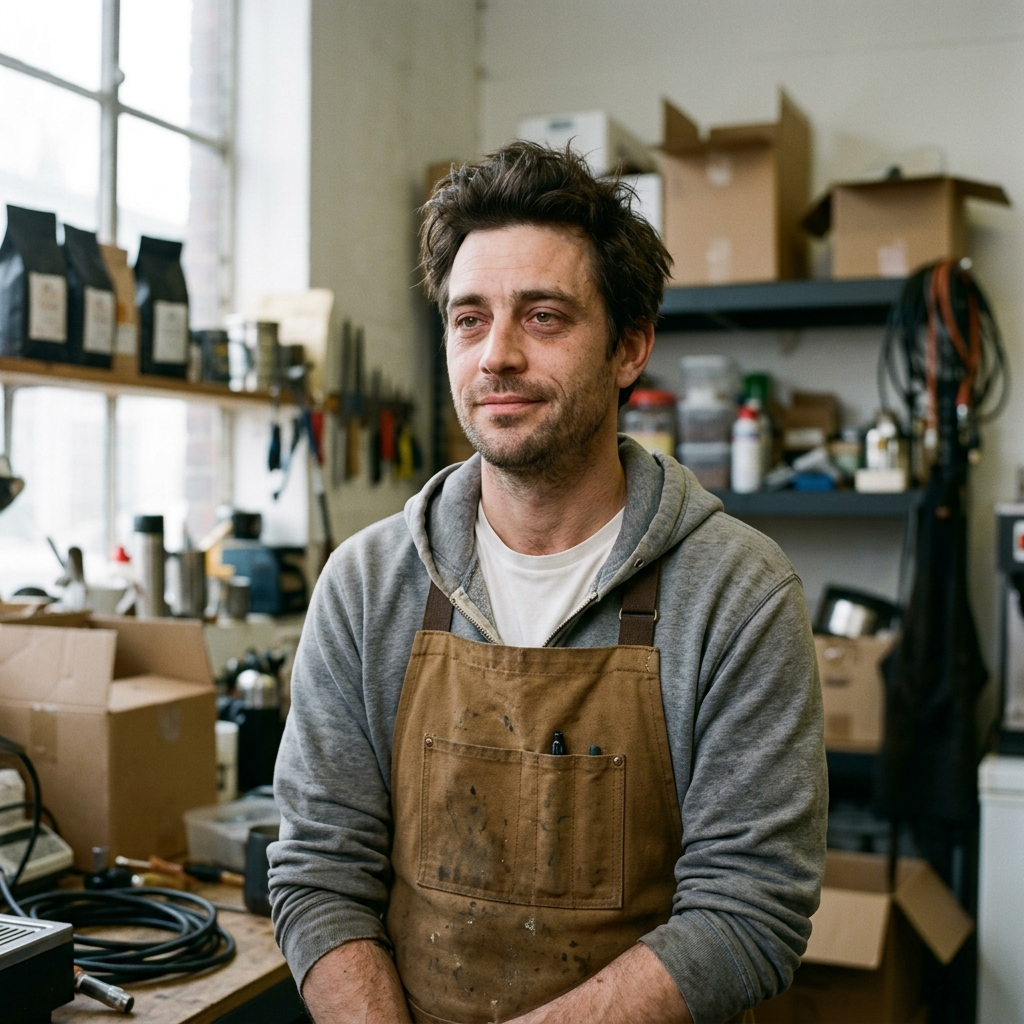
MEET THE Practical Minimalist
Hey, I'm Sam!
Sam has already lived through the world everyone around him seems determined to recreate.
Before the lemonade stand, Sam had a successful corporate career. He watched organizations take ideas that worked and surround them with strategy, management, expansion, procedures, and layers of complexity until the systems seemed more interested in maintaining themselves than improving what they were originally created to do.
Eventually, Sam walked away.
Not because he failed.
Because he could afford not to stay.
With enough saved to live modestly, Sam chose something smaller: work where effort and results remained connected, problems could be understood by the people solving them, and success didn't automatically mean becoming bigger.
The lemonade stand became a quiet expression of that philosophy.
Make lemonade.
Sell lemonade.
Treat people honestly.
Fix problems when they happen.
Sam respects people who genuinely try, even when they fail. He has far less patience for people who disguise simple problems underneath impressive terminology.
He rarely raises his voice and rarely needs to.
His solutions tend to sound painfully obvious precisely because everyone else has spent so much time searching for something more complicated.
The irony is that Sam escaped complexity only to discover that complexity doesn't always come from corporations.
Sometimes people bring it with them.
And slowly, almost without anyone intending it, the world Sam left behind begins rebuilding itself around a pitcher of lemonade.

MEET THE reframer
Hey, I'm Riley!
Riley understands something important about people:
What happens matters.
But how people describe what happened often matters just as much.
Riley is charming, observant, persuasive, and exceptionally comfortable changing the frame of a conversation. A customer doesn't dislike the lemonade—they may simply be experiencing palate fatigue. A questionable decision isn't necessarily a mistake. Perhaps everyone misunderstood the original objective.
Riley rarely marches into a quiet room looking for conflict.
That's unnecessary.
Someone will eventually provide something useful.
Greg brings an idea.
Blake introduces a procedure.
Claire assumes everyone is getting along.
Riley only has to push gently.
Part of Riley's confidence comes from being exceptionally good at reading social situations. Riley notices insecurity, pride, ambition, uncertainty, and the small openings people leave when defending themselves.
And then Riley talks.
Sometimes the result is helpful.
Sometimes everybody leaves the conversation slightly less certain that reality happened the way they remembered it.
Riley considers this a communication issue.
Probably yours.

MEET THE curious observer
Hey, I'm Anya!
Anya didn't originally come to the lemonade stand looking for work.
She came because it was strange.
Not dramatically strange.
That would have been easier.
It was quietly strange.
Adults were standing around operating a lemonade stand without an obvious plan to turn it into anything larger. There was no grand strategy, no clear ambition, and seemingly no reason the place should attract quite as many personalities as it did.
Anya became curious.
Curiosity is the closest thing she has to a guiding philosophy.
She watches before judging. She looks for patterns. Contradictions interest her more than easy answers, and understanding something matters more to her than immediately deciding whether it is right or wrong.
When an idea catches hold of her attention, Anya has a habit she developed as a child: she talks through the problem quietly.
Out loud.
She doesn't perform these thoughts for anyone. Speaking simply helps her organize complicated ideas and resolve internal questions.
Most people eventually stop doing that.
Anya never did.
So while everyone else sees a thoughtful woman occasionally talking to herself, the audience experiences something rather different.
It feels as though Anya is speaking directly to them.
She isn't.
At least, she doesn't know that she is.
That becomes one of the quietest jokes in SQUEEZED: Anya appears to understand the audience better than anyone else while remaining completely unaware that an audience exists.
And the longer she stays around the lemonade stand, the more patterns there are to notice.
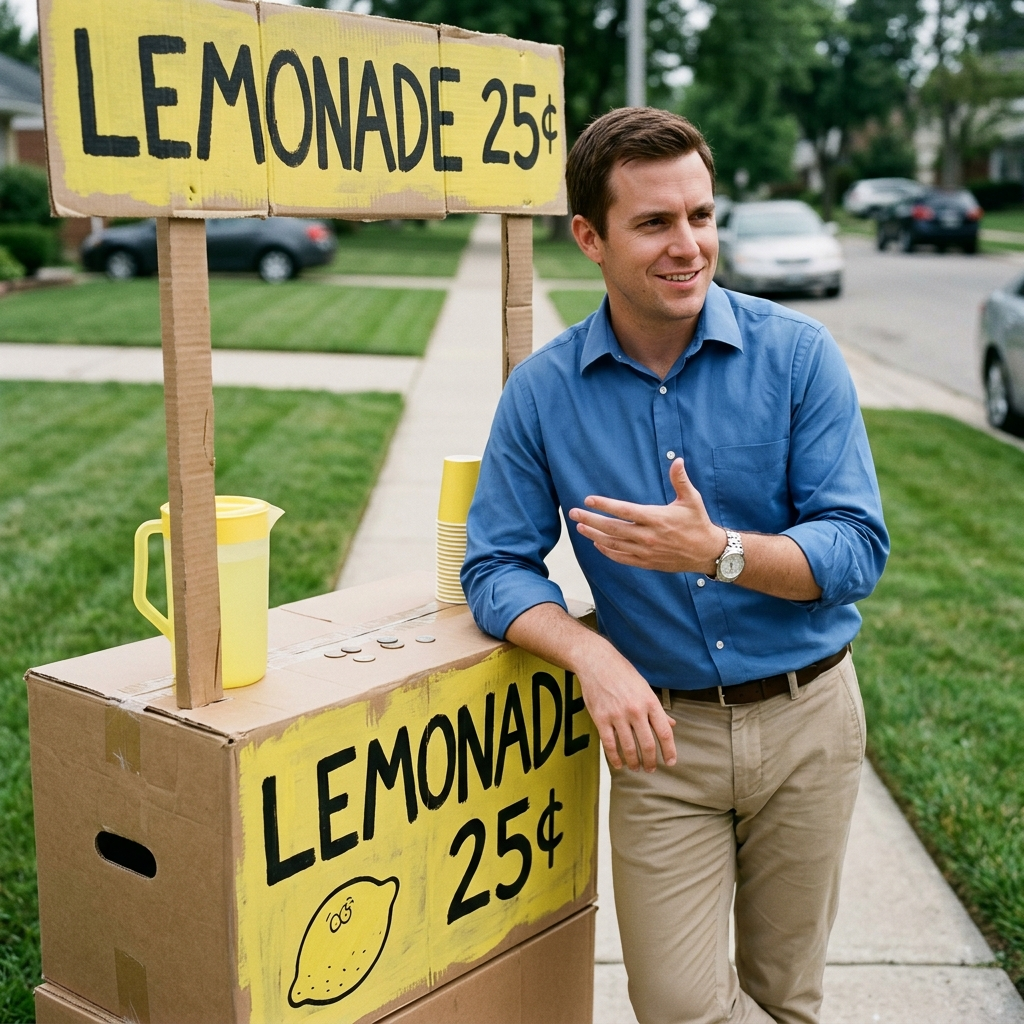
MEET THE unofficial strategist
Hey, I'm Greg!
Greg believes the lemonade stand has potential.
A dangerous amount of potential.
Other people look at the stand and see a small operation serving lemonade. Greg sees an underdeveloped business waiting for someone sufficiently ambitious to recognize what it could become.
Fortunately, Greg knows someone.
Greg.
Nobody hired him as a consultant, strategist, advisor, development specialist, or whatever title he happens to be using that afternoon.
But Greg doesn't need formal authority to have ideas.
He has lots of those.
Greg is genuinely creative. He is confident speaking about his plans and persistent enough that even absurd proposals can begin sounding surprisingly reasonable after the fourth explanation.
His weakness isn't that he wants the stand to fail.
Quite the opposite.
Greg wants success so badly that leaving something alone once it already works feels almost irresponsible.
Why remain one lemonade stand when there could be five?
Why have customers when you could have members?
Why sell lemonade when you could build a brand?
For Sam, Greg represents everything that slowly destroys a simple system.
For Greg, Sam represents everything preventing a simple system from becoming something extraordinary.
Both believe they're protecting the stand.
That's why neither argument ever completely goes away.

MEET THE heart of the stand
Hey, I'm Claire!
Claire isn't interested in what the lemonade stand could become.
She likes what it already is.
She has a life and a job beyond the stand, yet somehow keeps spending her free time there. The explanation isn't particularly rational.
The place simply feels good.
People talk there. People argue there. People return. Ridiculous things happen, someone eventually makes lemonade again, and somehow the stand survives another day.
Claire sees something almost everyone else misses when they become distracted by operations and arguments:
The stand has become a community.
Optimistic, supportive, empathetic, and naturally attentive to other people's emotions, Claire often stabilizes the group in ways that no procedure could.
Where Sam grounds situations through practicality, Claire grounds people emotionally.
That doesn't make her naïve, although her optimism can leave her more trusting than she probably should be.
She simply chooses to believe that people generally mean well.
Even when they're making everything dramatically worse.
Especially then.
Claire doesn't need the stand to become successful.
To her, people continuing to show up might already count.

MEET THE Coporate climber
Hey, I'm Blake!
Blake believes competence should be visible.
Preferably measurable.
As General Manager, she brings organization, structure, ambition, and a strong desire to demonstrate that the lemonade stand can operate like a professionally managed business.
Especially when Chad is around.
Blake works hard.
That's important.
The humor isn't that she is incapable. Much of the time, Blake genuinely is one of the most organized people at the stand.
The problem appears when organization stops serving the work and the work begins serving the organization.
A problem becomes a process.
The process needs documentation.
Documentation needs metrics.
Metrics require review.
Soon there is a meeting.
And somewhere during that meeting, Sam is still waiting for somebody to slice the lemons.
Blake's ambition is partly professional and partly personal. She wants corporate leadership to see someone who is competent, prepared, and ready for more responsibility.
Admitting uncertainty threatens that image.
So Blake compensates with additional structure.
And the more uncertain things become, the more structure appears.
Which tends to make things more uncertain.
There will presumably be a spreadsheet explaining this eventually.

MEET THE Unpredictable Authority
Hey, I'm Chad!
Authority at the lemonade stand doesn't look particularly authoritative.
That's Chad.
As Regional Manager, Chad technically occupies one of the highest positions connected to the stand while displaying remarkably little interest in behaving like the stereotypical corporate executive.
He doesn't micromanage.
He doesn't panic.
He isn't hovering behind employees checking whether every cup contains the appropriate quantity of ice.
Half the time he seems barely aware of whatever major initiative Blake has spent the week preparing for him.
This makes Chad simultaneously reassuring and terrifying.
Because his apparent disengagement occasionally disappears.
He looks at the situation.
Notices something everyone else has somehow accepted.
And asks the obvious question.
Why are there eleven flavors?
Why are we measuring lemonade productivity?
Why does any of this require regional oversight?
For several seconds, the entire system becomes visible.
Then Chad moves on.
His authority doesn't come from constantly controlling the room.
It comes from the fact that nobody can quite predict when he will suddenly understand it.
MEET THE Unresolved Presence
Hey, I'm The Anomaly!
The Anomaly does not arrive with an introduction.
It exists somewhere within the world of SQUEEZED—present enough to be noticed, but not yet explained.
Whether it has a history, a purpose, or even a place among the people surrounding the lemonade stand is something the story is not ready to answer.
What can be said is that its presence is deliberate.
The Anomaly is not simply a hidden character waiting for a name, nor a mystery included for the sake of having one. It belongs to a deeper layer of SQUEEZED—one that may only become visible when enough pieces begin to connect.
For now, there is nothing the audience is required to solve.
Only something worth remembering.